
Claudia Da Rin

A journey through a masterpiece. Discover Umbria

Umbria: The Perfect Addition to an Italian Journey

A small region where the variety of views and sights exceeds expectations, Umbria seems to condense the majority of landscapes that make Italy such a unique country. From the gentle shores of Lake Trasimeno to the high peaks of the Apennines, snaking around historic cities and their immense, proud heritage, sun ripened wheat fields and endless views of olive groves, Umbria excels at everything, not to mention its delicious culinary traditions, including first-class wines, beer and cured meats, truffles, tangy Pecorino cheese and world-famous lentils.

Nature triumphs everywhere, with lush forests, parks and reserves – Saint Francis from Assisi and his venerating Mother Nature is not a mere chance.

Embrace a slower, authentic rhythm while every town hides a surprise, maybe taking part in exciting music festivals along the way – jazz in Perugia and opera in Spoleto perhaps? – for a voyage of pure leisure.

Day 1 The sweet charm of Orvieto

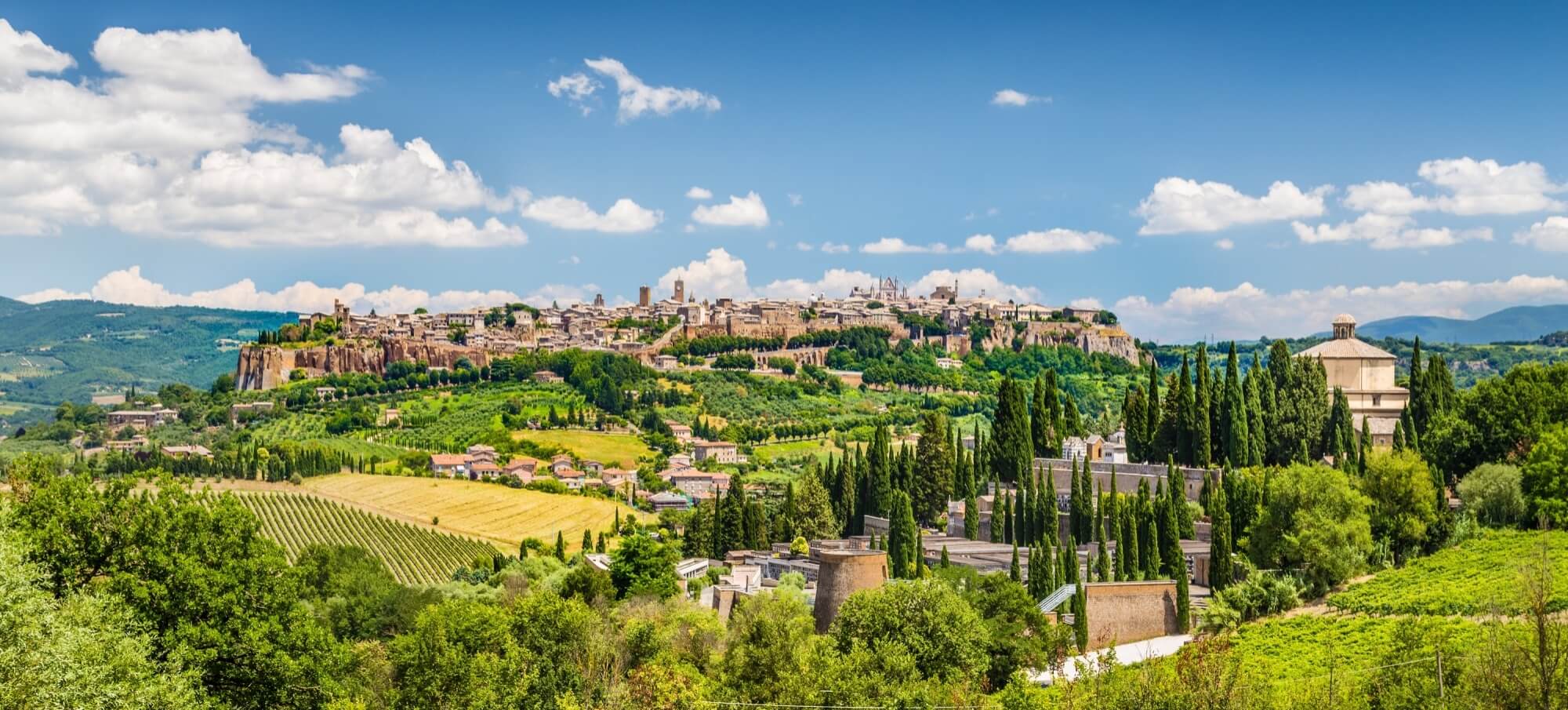
An appeal that goes far beyond picturesque, charming Orvieto captures your attention the moment you notice its lofty position on a natural pedestal. Its medieval fabric is revealed through its many medieval alleys, leading to such marvels as the Duomo. One of Italy’s most stunning Gothic cathedrals, the first mass was held here in 1297. Perhaps summing up all the glory of this authentic city-state, the exterior is a joyful harmony of coloured frescoes, delicate bas-reliefs and precious mosaics, while the interior holds such treasures as the Chapel of San Brizio. The fresco cycle dedicated to the Last Judgement, started by Beato Angelico in 1447 and completed by Luca Signorelli in 1504, is said to have inspired Michelangelo for the Sistine Chapel.  

After a gourmet lunch to taste delicious Umbrian delicacies, step outside and get lost within the many medieval alleys, paying a visit to the 12th c. church of San Giovenale and its quarter, perusing at the many local artisan shops where every craft is a work of art.

Did you know that Orvieto’s reputation for ceramics dates back to the 13th and 14th centuries, when this beautiful Umbrian hilltop town became one of Italy’s most important pottery centers? Skilled artisans produced richly decorated earthenware that laid the foundations for the spectacular Renaissance maiolica tradition that would later flourish throughout Italy. Even today, visitors can discover workshops, artisan studios and local boutiques that keep this centuries-old craft alive, offering a unique glimpse into a tradition that has shaped Orvieto’s cultural identity for over 700 years. It is yet another reason why a stay at Palazzo Petrvs is the perfect opportunity to explore the authentic soul of Orvieto beyond its famous cathedral and underground city.

Day 2 – Go underground in Orvieto

Start the day by discovering a masterpiece of Renaissance engineering, the Well of San Patrizio. Designed by Antonio da Sangallo in 1527 – commissioned by Pope Clement VI, who was taking refuge there during the Sack of Rome – walking down the well you’ll feel like you’ve entered an Escher painting. Sixty-two metres deep and 13 metres wide, the well features two independent, overlapping spirals that twist down to the bottom allowing people and pack animals to descend and ascend without ever crossing paths: this formed a precious, reliable water supply and is an astonishing sight.

Check the other underground marvels of Orvieto Underground, a hidden world beneath the city:  a series of 440 underground caves that have been used for several purposes over time, as wine cellars, refrigerators, a well and WWII bomb shelters. This network of caves and passageways reveal layers of Etruscan, Medieval and Renaissance life that make it a unique sight. 

Go up the 13th c. Torre del Moro to be part of the Orvieto skyline. This 50-metre high clock tower divides the four quarters of Corsiva, Olmo, Serancia and Stella: what a view from the top!

In the evening, check what’s on at Teatro Mancinelli: you may enjoy a lovely performance.

Day 3 A triumph of harmony: Todi 

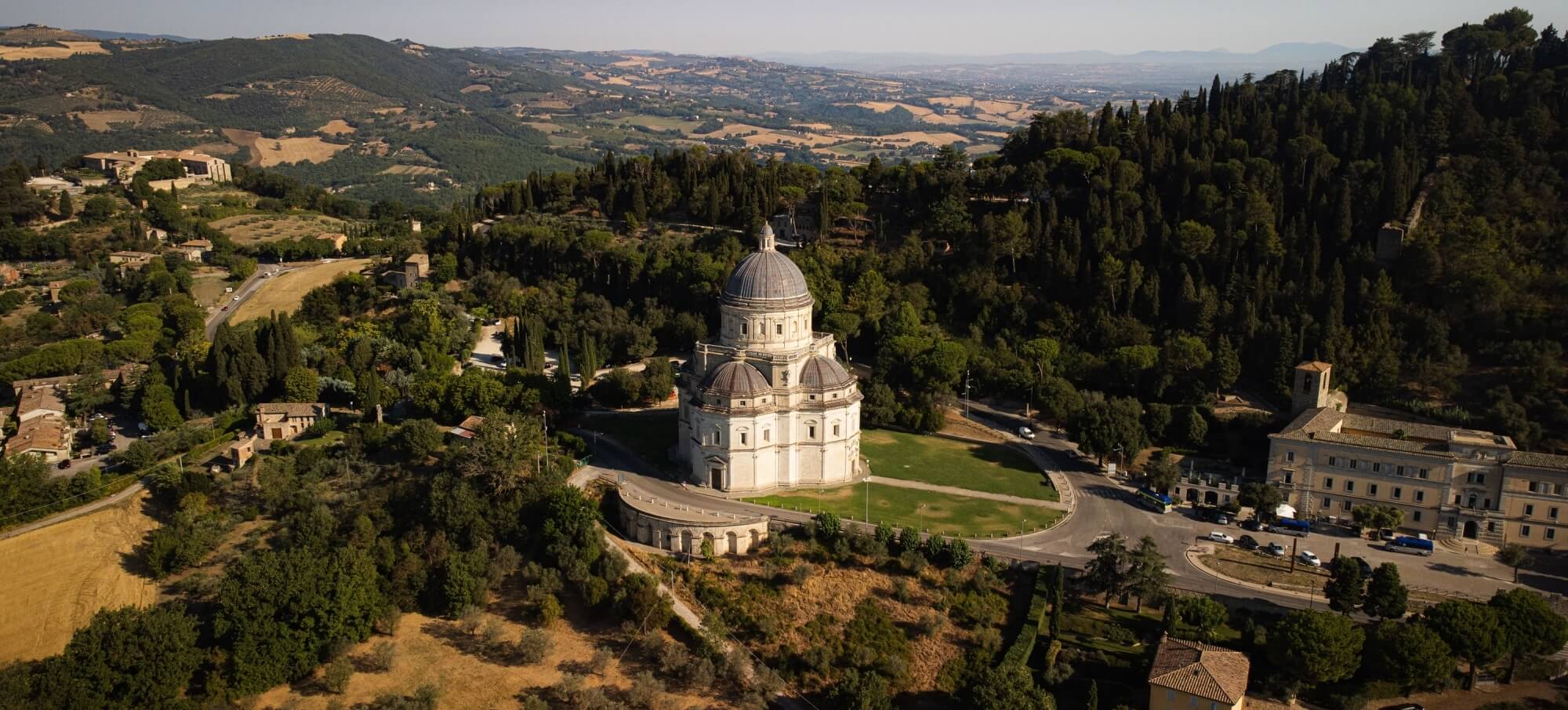
A small region and yet the choice is endless, every small town preciously hiding its proud heritage. Drive west of Orvieto towards Todi and be met by a fairy-tale town, its three sets concentric walls dating back to different eras, from the Etruscan to Roman and medieval times. Enjoy lovely Piazza del Popolo, among the finest medieval squares in the region, flanked by the Cathedral of Santa Maria Annunziata – do not miss the fresco depicting the Last Judgement – 13th c. Palazzo del Popolo and Palazzo del Capitano. Go up the San Fortunato belltower, next to the church that contains fresco fragments by Masolino da Panicale, and enjoy lovely views of the surrounding countryside.

Here, too, a world of underground cisterne (caves) reveals the clever artistry of preserving water, a practice in use since Roman times – a fresh respite during warmer summer days.  Pay a visit to the Tempio di Santa Maria della Consolazione, outside the city walls, and be stunned by this masterpiece of late Renaissance Architecture: a perfect Greek-cross plan and a splendid, 50-meter dome for a project attributed to the famous architect Bramante

Day 4  - A colourful encounter: Spello

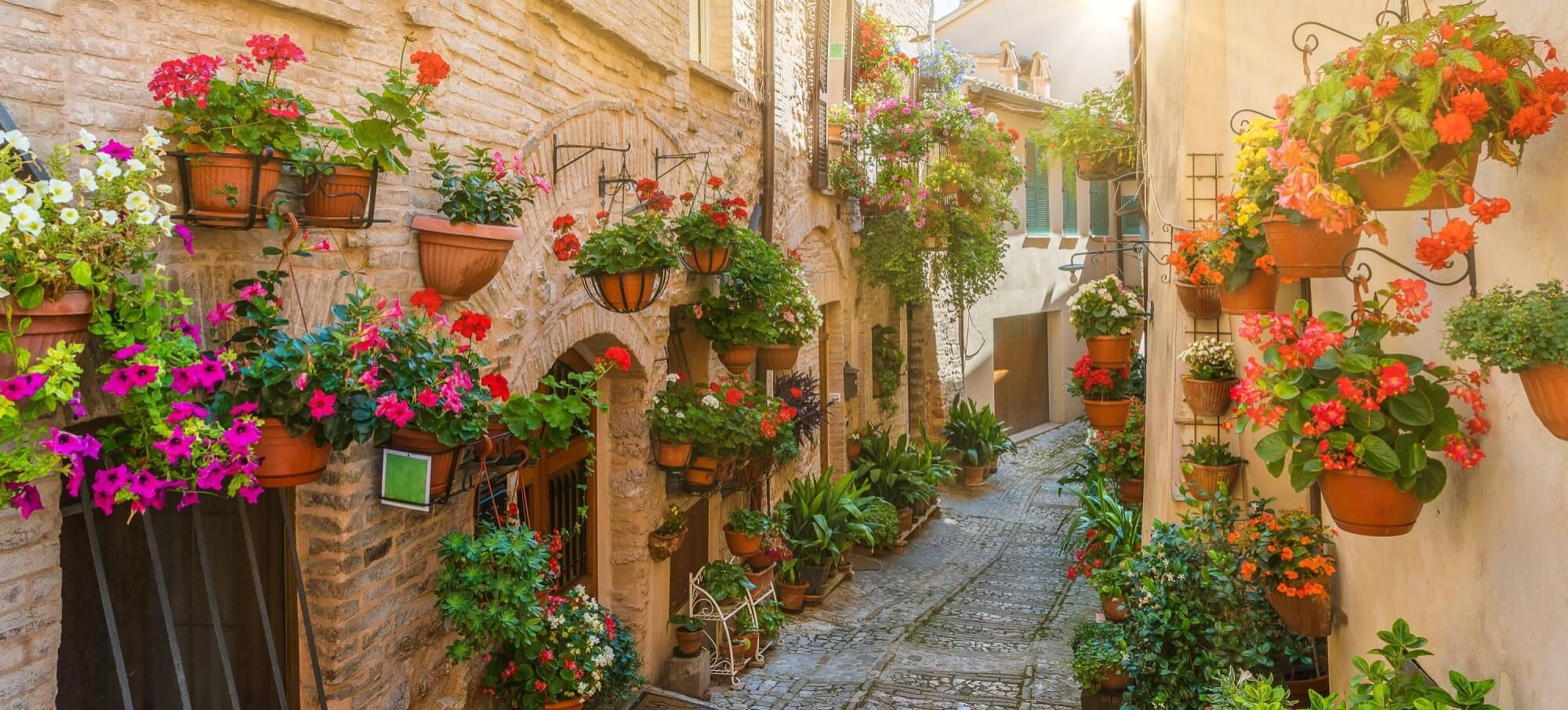
Sometimes names contribute to the aura of a destination: Spello sounds sublime and the reality if even more picturesque. Rising from the slopes of Monte Subasio, the town is a collection of honey-tinted stone houses and churches, surrounded by Roman walls – Porta Urbica, Consolare and Venere – and several towers. Echoes of its Roman past are held in the Spello Mosaic Villa, established after a 2005 discovery of a Roman complex, decorated with stunning mosaics.

The Baglioni Chapel in 12th c. Santa Maria Maggiore’s church is fabulous: the delicate Annunciation by Pinturicchio, along with the fresco cycle depicting scenes from the life of Mary and Jesus, are impressive. From Spring to the end of summer, Spello parades its best colours: a competition on Finestre, balconi e vicoli fioriti means locals bring out their best flower arrangements, the many medieval alleys coming alive in a happy, colourful triumph. Then, of course, it’s the Infiorata: on the 9th Sunday after Easter – Corpus Christi – locals decorate the streets with images put together by flower petals. The patterns are laid out the night before and the outcome is a stunning, creating a colourful array that feels most extraordinary.

Day 5 When art meets devotion: Assisi

You do not need to be a true faithful to grasp the religious narrative that sets Assisi alive. A UNESCO World Heritage site and the birthplace of Saint Francis, patron of Italy together with Saint Catherine of Siena, the town sees pilgrims and art lovers from far and wide, and yet the pious fabric revealed through its many sites never fails to impress. Looking at the fabulous Giotto frescoes in the upper and lower Saint Francis basilica, painted by Giotto and his workshop, Cimabue, Simone Martini, Pietro Lorenzetti and minor artists, depicting the life of the saint, are nothing short of extraordinary. Not even the terrible 1997 earthquake that hit Umbria and Le Marche, severely damaging the basilica and many other places, succeeded in softening the aura of this place. Many other churches further enhance the devotion felt throughout Assisi, like San Damiano and the Basilica of Santa Chiara, but Assisi also holds a powerful Roman heritage, seen in the Temple of Minerva, built in the 1st c. BC, and the Roman Forum, beneath Piazza del Comune, testifying to the pivotal role played by the city over time.  

Sporty types may hike to the Eremo delle Carceri: located about 4 km from the centre of Assisi in the forested slopes of Monte Subasio, here Saint Francis used to come to pray and meditate. The place where Saint Francis took refuge after renouncing worldly goods is the Porziuncola, a smaller church located inside Santa Maria degli Angeli, outside the city centre: you may want to pay a visit and feel its momentum.  If you stay until dusk, enjoy the rosy glow that brings further emotions to such a magical place, leaving long-lasting memories of an exceptional place.

Day 6   Life at a slower pace - Lake Trasimeno

Amid the invaluable historical and artistic heritage that makes Umbria so attractive, the region is dominated by nature, Lake Trasimeno showing this off admirably. Italy’s fourth largest lake, this sublime area is dotted with olive groves, oak trees and cypresses, with sunflower fields creating a colourful backdrop.  You may want to drive along the Trasimeno Wine Route, going in search of vineyards where the Colli del Trasimeno DOC wine is produced, taking you to pretty Castiglione del Lago – many famous figures journeyed here, from Leonardo da Vinci to Machiavelli – to discover the church of Santa Maria Maddalena, the Rocca del Leone and the adjacent Palazzo della Corgna. Passignano is another picturesque village perched on the lake, with a lovely old town and a Rocca dominating the area. Take a ferry from here and visit lovely Isola Maggiore, with its small fishing village, and Isola Polvese, a protected nature reserve that forms an oasis of peace and tranquillity. The ancient monastery now houses a research centre for environmental education, the island itself providing the testing ground for sustainable research. 

The experience can be enriched with visits to local olive oil mills, where guests can learn about traditional production methods and enjoy tastings of Umbria’s celebrated extra virgin olive oil, one of the region’s most treasured culinary traditions.

Riding a wild horse: Sagrantino wine

The choice is endless when it comes to Italian wine, Umbria making no exception. Come to Montefalco if you want to taste its powerfully structured Montefalco Sagrantino, the region’s premium red wine, made exclusively with Sagrantino grapes. Here, wine making dates back to pre-Roman times and it shows. Like a wild horse, Sagrantino is strong, untamed, and demanding.

Montefalco Sagrantino and Torgiano Rosso Riserva are the region’s flagship red wines: having more polyphenols than other red grapes, Sagrantino is a deeply-coloured, full-bodied wine with tannic backbodies. To help tame such vigorous tannins, this wine has a minimum mandatory ageing of 37 months; growing in the right area and harvesting at the perfect ripeness are clearly vital. The outcome is akin to a work of art:  enjoy it in Bevagna as well, another superb medieval town – admire its lovely Piazza Silvestri – and you’ll feel like you’ve grasped the essence of Italian wine making skill.

Follow the beat - Umbria Jazz

Founded in 1973, Umbria Jazz is the heart and soul of Jazz lovers around the world, who come to magnificent Perugia to enjoy the funky, laid-back atmosphere of a unique experience. Initially a travelling event, with a concert in a different Umbrian town every night, it now steals the heart of music lovers in Perugia. Its Arena Santa Giuliana and medieval alleys come alive with good vibes and the joyful feelings that only music can deliver. A winter edition is organised over New Year in Orvieto, with the best jazz, funky, soul and gospel musicians, to capture the magic of the lovely Umbrian town.

Performing arts in a unique location – the Festival dei due Mondi

Begun in 1958 with the Verdi opera adaptation of Shakespeare’s Macbeth, the Festival dei due mondi was launched by the composer Giancarlo Menotti, bringing world-class artists to Spoleto ever since. Theatre performances, talks, concerts, opera performances and street parades celebrate the creative aura of this lovely Umbrian town. Named a “city of theatres”, Spoleto hosts a 1st c BC Roman theatre, the 18th c. Caio Melisso Theatre, Teatro Nuovo and Teatrino delle 6, along with newly developed theatre venues. Performing arts live in unison in this medieval gem, the festival celebrating its unique aura.


Finding the Grand Canyon in Umbria – Gole del Forello

Set between Todi and Orvieto, the Forello ravine was shaped by the Tiber river over centuries and stuns visitors with its high walls in the area close to Titignano. Here, the river separates the land that was colonised by the Etruscans, on the right bank, and the Umbrians on the left. You’ll be met with karst inlets and extraordinary caves, such as the Grotta della Piana and Grotta del Vergozzino. Further on, artificial Corbara Lake, surrounded by olive trees and vineyards, offers lovely walking opportunities. History lovers will dwell with the Scoppieto archeological area and the 11th c. Pasquarella Hermitage, a site that gave rise to many mysterious legends.

The Cascata delle Marmore

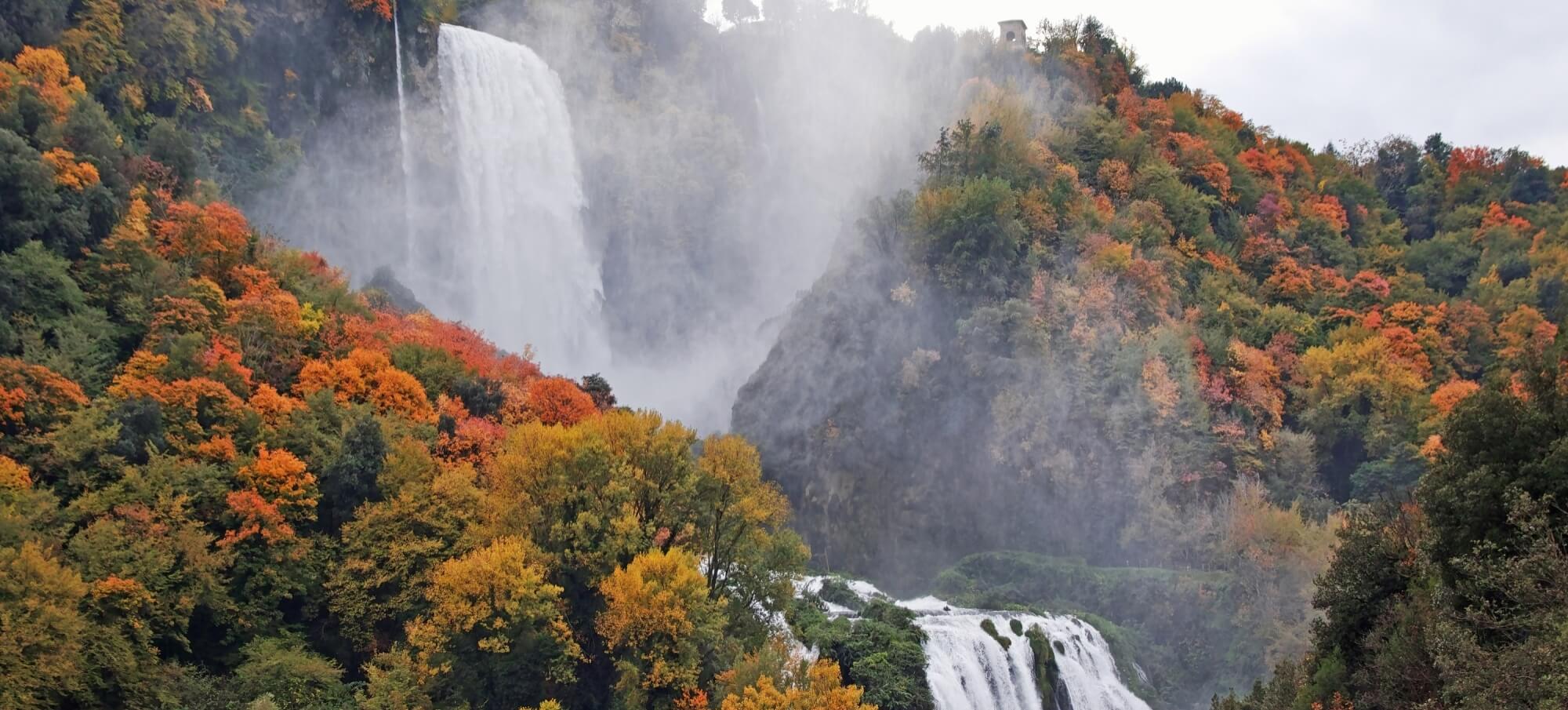
This is one of Umbria’s most spectacular natural attractions and among the tallest man-made waterfalls in Europe. Created by the ancient Romans over 2,000 years ago, the waterfall plunges 165 meters in three dramatic tiers, creating an unforgettable display of water, mist and rainbows. Visitors can explore scenic walking trails, panoramic viewpoints and lush surrounding landscapes, making it a perfect excursion for nature lovers and outdoor enthusiasts seeking one of the region’s most iconic experiences.

WHERE TO STAY: Palazzo Petrvs in Orvieto

Accessibility
close
Accessibility Information

Together with our selected providers, we are committed to ensuring that our services are accessible to people with disabilities. We devote significant resources to ensure that our website and room booking pages are easier to use and more accessible for individuals with disabilities, based on the strong belief that everyone has the right to live with dignity, equality, comfort, and independence.

Along with our partners, we continuously strive to improve the accessibility of our website and the pages for booking rooms and/or purchasing additional products and services related to the stay. We firmly believe it is our collective moral obligation to allow seamless, accessible, and unhindered use, even for those of us with disabilities.

In our ongoing efforts to improve and consistently address accessibility issues, we regularly scan all web pages using accessibility scanners provided by third-party commercial partners to identify and fix any potential accessibility barriers on our site. Despite our efforts to make all our web pages and content fully accessible, some content may not yet have been fully adapted to the strictest accessibility standards. This may be due to not having yet found or implemented the most appropriate technological solution.

Compliance Status

This website and the room booking pages are partially compliant with the technical standard for websites and mobile applications UNI CEI EN 301549, and with the “AA” accessibility level required by the Web Content Accessibility Guidelines (WCAG) 2.1.
In particular, the compliance level of this website is constantly monitored through the tools provided by:
https://mauve.isti.cnr.it/
https://pagespeed.web.dev/

Non-accessible Content

Despite our efforts to ensure the accessibility of the website and booking pages, we are aware of some limitations we are working to resolve. Below is a description of the known limitations. Please contact us if you encounter an issue not listed below.

  • Image text alternatives: Some images do not have meaningful text alternatives for users.
  • Reading order: Due to the modular structure of some pages, the reading order of elements may not match their visual order.
  • Focus contrast: In some cases, when elements receive focus, there may be insufficient contrast between text color and background.
  • Keyboard operability: Some components cannot be operated using only a keyboard.
  • Animated content: Some pages contain animated content that cannot be paused or hidden.
  • Focus visibility: In some pages, the element with active focus is not visually identifiable.
  • Language accessibility: Some elements display text or accessible names only in certain languages.
  • Assistive technology: Assistive technologies may not always correctly announce messages.

Last Updated

This page on accessibility was last updated on June 25, 2025.