
Claudia Da Rin

Sardinia - Creativity beyond the realms of taste and beauty

A journey through Sardinian craftsmanship and cuisine.

The beauty of an island with such a strong heart as Sardinia becomes blatant in its distinctive, authentic culinary and artistic production, conquering visitors even before they’ve had a chance to explore its fabulous natural and historical heritage.

Wherever you’ll land on this magic island, you won’t be far from an unexpected treasure: a long-lost archaeological marvel, a gorgeous lake amid verdant woods, the largest canyon in Europe and two national parks. Oh, we haven’t mentioned its exquisite wine production and food fanfare, along with blissful beaches and the turquoise sea.

Could this be your passport to paradise?

1. Weaving the myth – Sardinian textile production

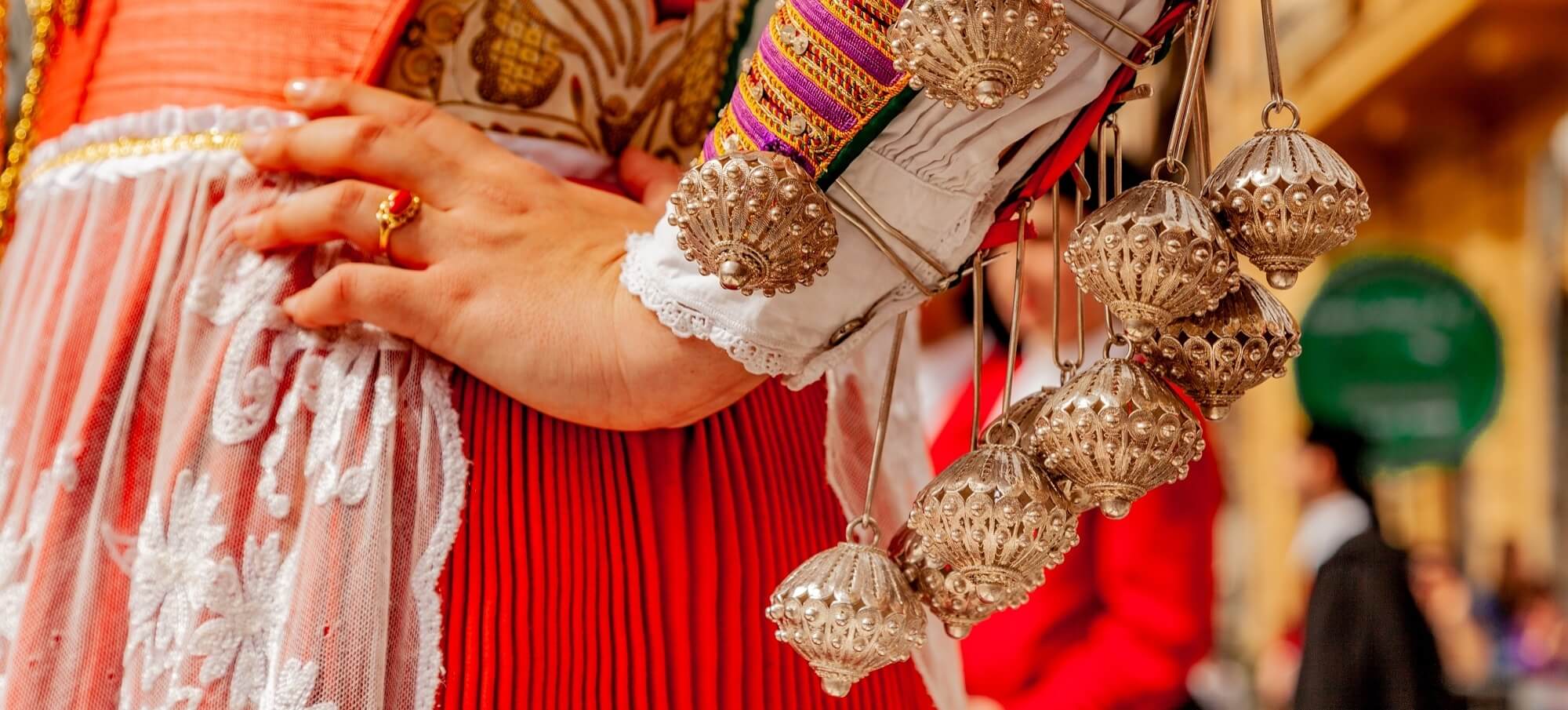
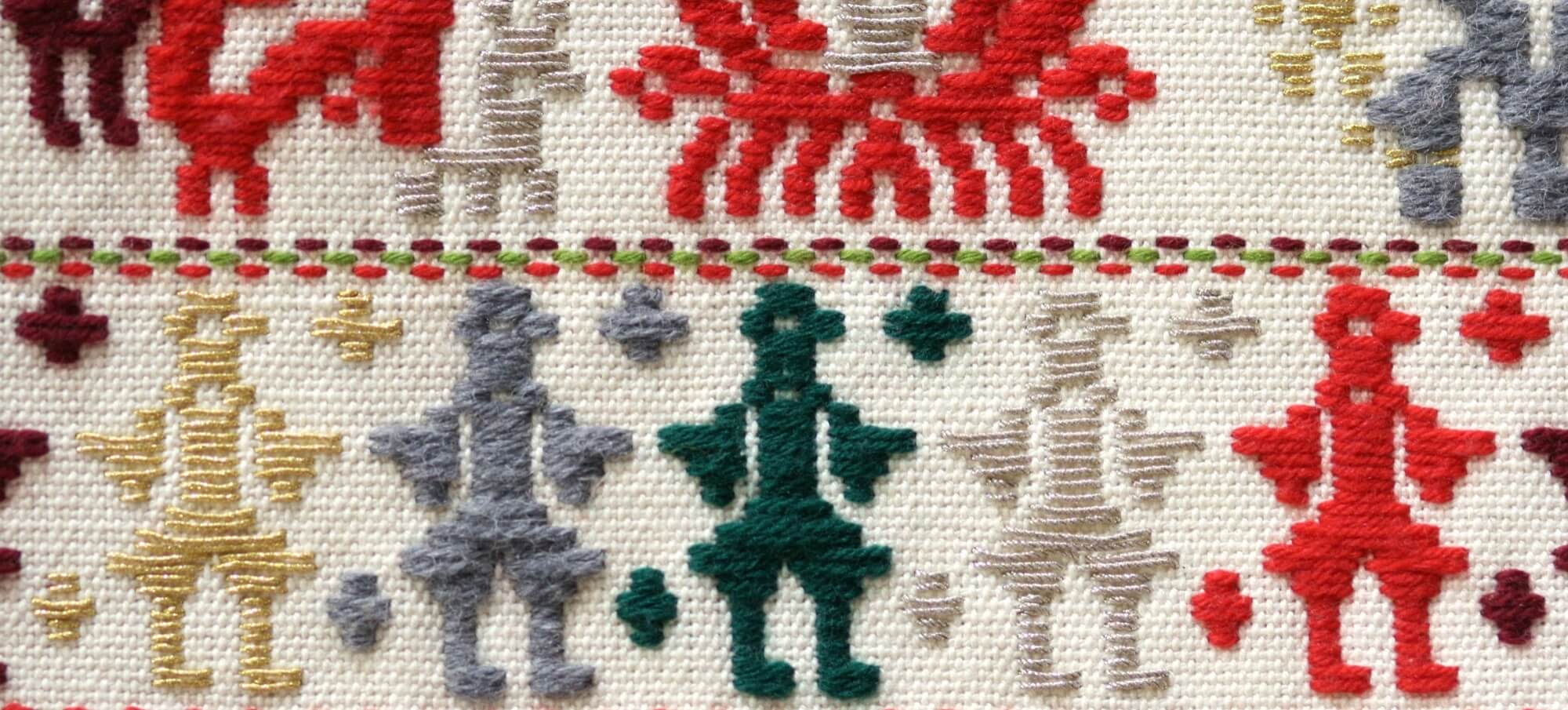
Mainly carried out by women, initially as an artisanal production and later as a form of emancipation and entrepreneurial acumen, the textile production in Sardinia goes well beyond pretty decorations and nice patterns. Handed down from one generation to the next, the motifs on any textile garment were – and are  - inspired by the natural world and geometric shapes, but also Nuragic, religious and heraldic symbols.

Traditional Sardinian weavings feature a raised thread called pibiones – meaning “grape seed” in the local dialect – and its production requires painstaking attention. Textiles were mainly destined to the dowry of young women and a loom features in nearly all homes: in the 1960s, the association I.S.O.L.A. was created – the Sardinian Institute for the Organisation of Artisanal Work – which organizes courses and encourages the preservation of this pivotal artistic heritage. Find out why these remarkable products are creative marvels. 

2. When art meets traditions - Sardinian carpets

Art is a form of expression, whatever the media employed, and Sardinia excels in its stellar craftsmanship heritage. Crafting textile represents an art form for Sardinian women, and learning to weave also stood for a way of being, as well as the apprentice of a craft. This comes across when considering the many rules and gestures associated with the textile production, such as crossing the weaves lain in the street as being forbidden, as that was the work of the devil, or the end of any textile manufacture being solemnly acclaimed with the reading of the De Profundis psalm.

Among the many extraordinary textiles crafted on the island, the carpets of Nule are worth a special mention. This small hamlet close to Sassari sees the most outstanding production of handmade wool carpets, where various shapes and patterns make every item a unique gem. Used on the floor, but also to cover chests, the carpets originally employed black and white wool, the main technique being called “a fiamma” (flame), with colours being added at a later stage and now celebrating a unique treasure, a gift for future generations and a tribute to those who preceded them. 

3. Travelling through time – Sardinian ceramics

Ceramics have been crafted on Sardinia for millennia, with the first written record dating back to 1692, testifying the existence of a corporation that outlined rules and methods of production, for what were primarily modest tools to be used at home. This meant that the products hardly ever possessed a real creative flair, but things changed in the 20th c, when artists like the brothers Melis, Francesco Ciusa, Salvatore Fancello and Eugenio Tavolara added an artistic connotation to their output, transforming this practice into a real craft.

Today, Sardinian ceramics can both have a practical as well as a decorative function and impress for their extraordinary colours and shapes, being inspired by the natural world. The materials vary from red to grey clay, and the potter’s wheel is employed, requiring great skill for what is a delicate technique. Oristano, Dorgali, Sassari and Siniscola are among the most celebrated places where ceramics are produced, with the inland areas around Cagliari, chiefly Assemini, being heralded as one of the “ceramic cities” of Italy. Bring home a piece of Sardinia and cherish this long-standing, authentic tradition. 

4. Wine of delights – Vermentino

Everybody knows that vineyards across the Italian peninsula are blessed with a rich soil and the superbly placed sun exposure that contributes to the creation of unique delights.  Sardinia excels even further, considering the variety of its soil, the typically Mediterranean climate that yields the correct balance between acidity and sugar in the grapes, with the wind blessing the vineyards, reducing any insect disease that may crop up elsewhere. Grapes have been grown here for several millennia, and among the several excellent varieties, the most famous ones are Vermentino and Cannonau.

The former grapes are found throughout the island, but the only DOCG in Sardinia - the highest rank in the 4-tier Italian classification system – is grown in the north-east Gallura area. Benefiting from the sun that reflects the sea, the grapes are often grown north-facing, to protect them from the intense heat: the outcome is a fruity, tasty wine with a bright, refreshing acidity and a unique mineral connotation. Raise your glass to a superb vintage!

5. A toast to eternity - Cannonau

Longevity in the so-called blue zones across the world has sparked interest in several regions where centenarians seem to have the time of their lives. Sardinia is one such area and the recipe to this longevity may reside in specific genes, in the climate, in the emphasis on family values – celebrating the elders – and an overall healthy Mediterranean diet. It would also appear that the delicious red Cannonau wine plays a part. Grown across the island, this dark grape may have been introduced during the Spanish domination and the most typical production comes from the Nuoro region, mainly the Barbagia, Supramonte, Mandrolisai and Ogliastra districts, with the Oliena, Jerzu and Capo Ferrato varieties being among the most famous ones.

A strong, robust wine with more anti-oxidants than other types, to protect the cardiovascular system, its scent is a journey into the Mediterranean shrub, its taste displaying fruity and spicy connotations.  You can discover this delicious treat by exploring the recently established Strada del Cannonau – a cycling route, too! – where you’ll visit local wine farms and see how the wine is produced. Sardinians have enjoyed Cannonau for centuries: come and try this delight for yourself.   

WHERE TO STAY

Su Gologone Experience Hotel

L'Ea Bianca Luxury Resort

Discover Sardinia My WAy DMC for authentic itineraries in Sardinia  https://sardinia-my-way.com/ 

Accessibility
close
Accessibility Information

Together with our selected providers, we are committed to ensuring that our services are accessible to people with disabilities. We devote significant resources to ensure that our website and room booking pages are easier to use and more accessible for individuals with disabilities, based on the strong belief that everyone has the right to live with dignity, equality, comfort, and independence.

Along with our partners, we continuously strive to improve the accessibility of our website and the pages for booking rooms and/or purchasing additional products and services related to the stay. We firmly believe it is our collective moral obligation to allow seamless, accessible, and unhindered use, even for those of us with disabilities.

In our ongoing efforts to improve and consistently address accessibility issues, we regularly scan all web pages using accessibility scanners provided by third-party commercial partners to identify and fix any potential accessibility barriers on our site. Despite our efforts to make all our web pages and content fully accessible, some content may not yet have been fully adapted to the strictest accessibility standards. This may be due to not having yet found or implemented the most appropriate technological solution.

Compliance Status

This website and the room booking pages are partially compliant with the technical standard for websites and mobile applications UNI CEI EN 301549, and with the “AA” accessibility level required by the Web Content Accessibility Guidelines (WCAG) 2.1.
In particular, the compliance level of this website is constantly monitored through the tools provided by:
https://mauve.isti.cnr.it/
https://pagespeed.web.dev/

Non-accessible Content

Despite our efforts to ensure the accessibility of the website and booking pages, we are aware of some limitations we are working to resolve. Below is a description of the known limitations. Please contact us if you encounter an issue not listed below.

  • Image text alternatives: Some images do not have meaningful text alternatives for users.
  • Reading order: Due to the modular structure of some pages, the reading order of elements may not match their visual order.
  • Focus contrast: In some cases, when elements receive focus, there may be insufficient contrast between text color and background.
  • Keyboard operability: Some components cannot be operated using only a keyboard.
  • Animated content: Some pages contain animated content that cannot be paused or hidden.
  • Focus visibility: In some pages, the element with active focus is not visually identifiable.
  • Language accessibility: Some elements display text or accessible names only in certain languages.
  • Assistive technology: Assistive technologies may not always correctly announce messages.

Last Updated

This page on accessibility was last updated on June 25, 2025.