
Claudia Da Rin

Adventures around a medieval gem

Discover Siena and its surroundings

The perfect embodiment of a medieval treasure, Siena strikes a chord with visitors the minute they approach it from one of its three hills.

A unique layout that has remained unvaried over the course of seven centuries, Siena is a living tribute to Gothic marvels, a UNESCO site surrounded by quintessentially Tuscan landscape, rolling hills and cypress-clad roads that reach superb destinations.

Perhaps best known for its celebrated Palio, the annual horse race that unites the crowds but fiercely divides the many contrade, Siena is a living masterpiece, whose individual and very special history gave rise to its uniqueness. The Duomo and its precious marble floors, Santa Maria della Scala, the frescoes in the Palazzo Pubblico and the numerous artworks alone are worth a trip, and yet its charm also lies in its proud essence, its private palaces, the many botteghe where skilled artisans learn ancient traditions and its overarching iconic landscape. Outside the city, it’s a tribute to medieval and Renaissance wisdom and artistry, the many perfectly preserved hilltop towns appearing like hidden gems, revealing their charm in a layer of surprise and astonishment. And when your inner artist is in search of equally salient inspiration, delve into the extraordinary richness of Tuscan cuisine, perhaps going truffle hunting or learning to make a gourmet meal, visiting an exclusive winery and toasting to a trip of delight.

1. The Duomo and its marble floors

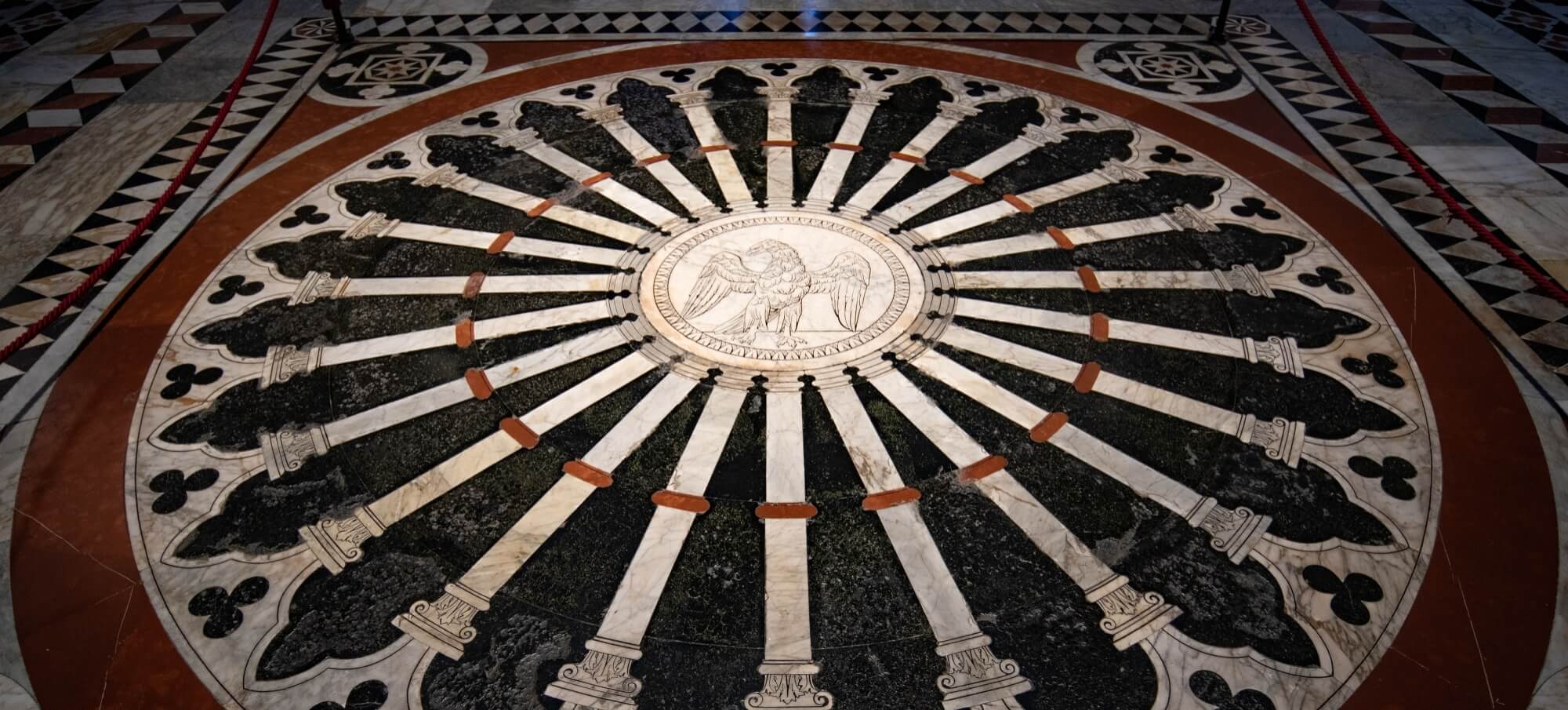
Italy has no shortage of fabulous churches and superb cathedrals where devotion, combined with illuminated patrons, gave rise to unique masterpieces. Siena’s Gothic Duomo is no exception: an ecclesiastical complex including a museum, baptistery and crypt, it stuns for its exceptional façade and the artworks it contains. Giovanni and Nicola Pisano, Donatello, Ghiberti, Jacopo della Quercia are among the many artists who contributed to a treasure trove of incredible skill: it is, however, the marble floors that perhaps draw crowds and steal the scene. An intricate inlay mosaic where the graffito technique of intense scratching was used, the fifty-six panels were created over several centuries – 14th to the 19th – their message an invitation to embrace wisdom. The varying geometric patterns weave a complex, unique stone tapestry, fully revealed only for a few months of the year – 2026 dates are 27 June to 31 July and 18 August to 15 October

Speak to one of the Sienese artists who restored this masterpiece to gain insight into how it was all created: an exclusive experience to hear first-hand impressions of this pivotal masterpiece is one you really should not miss.

2. Spectacular and colourful: the Palio

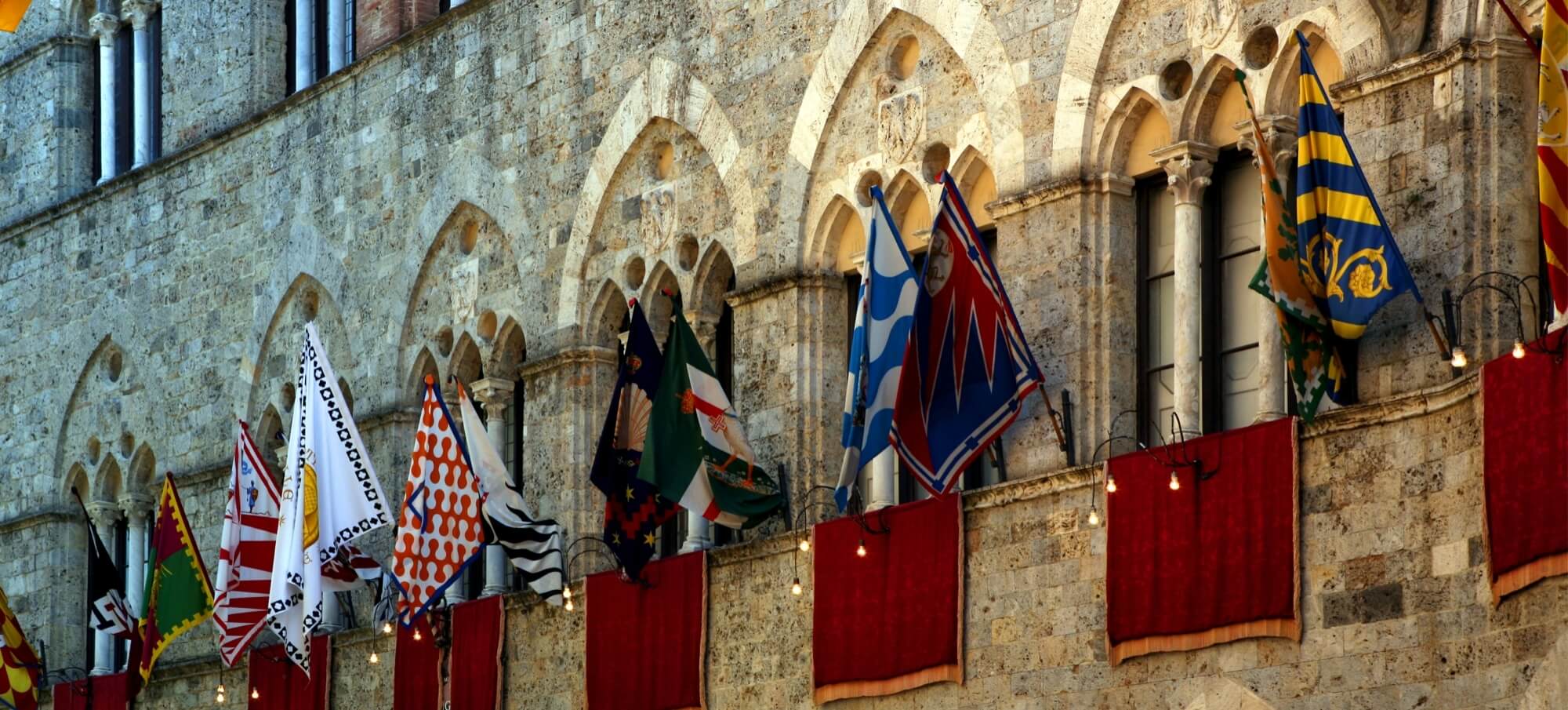
A history of pride, belonging and faith, Siena and the Palio are two flip sides of the same coin, living in unison in a story made of rites, traditions, and identity. Making up the soul of the city unlike anywhere else in Italy, the contrade – districts – run wild twice a year – 2 July and 16 August – in what is the world’s most famous historic horse race. Dating back to the 13th century, this mad-dash competition sees ten horses and their bareback riders, representing ten of the seventeen contrade, taking part in a frenzied, extremely fast and fierce rivalry, running three times around a constructed dirt racetrack in iconic Piazza del Campo. The winner acquires the coveted palio, a silk banner, with months-long celebrations to follow. Dressed in their individual banners, the riders parade before the race, with rituals and traditions adding a special aura to an ecstatic event.

Enjoy exclusive access to private palazzi with views onto the square, live the emotions, tensions and ceremonies before and after the race for what is a unique experience, a window onto the heart of the city.

3. A city with a view: this is Siena

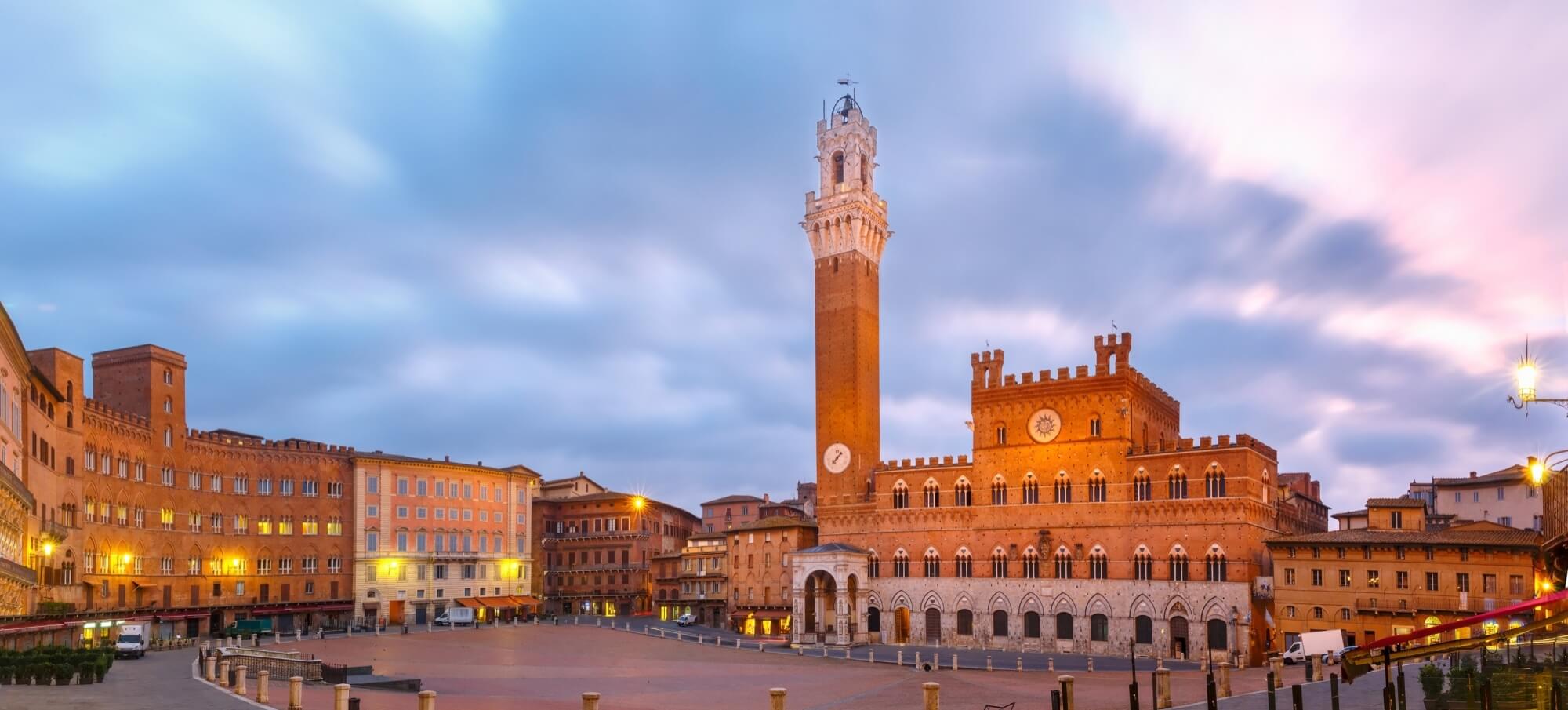
Displaying a skyline that has pretty much unchanged for the past 700 years, Siena reveals its aura from several viewpoints. Red-brick, slender Torre del Mangia, Italy’s fourth tallest tower, is an obvious choice: a symbol of the city, the views from the top triumph over Piazza del Campo and further afield, embracing the Tuscan countryside in a game of harmony and poise. Within the city, you’ll find plenty of places where the gaze stretches beyond the horizon, like Camporegio and Vittorio Veneto streets, while via di Diacceto gives a superb view onto the Basilica di San Domenico. Piazza Salimbeni is where you’ll find the perfect union of balance and rigour in the 14th c. Palazzo Salimeni, prominently dominating the square. This is where the ancient Monte dei Paschi di Siena, one of Europe’s oldest banks and founded in 1472, still has its seat.

Wouldn’t it be magical to have private access into one – or more – of the many private palaces in town? Or learn about the origins of the contrade by visiting their headquarters, also accessing private archives? Guided by learned scholars, you will grasp the social, political and emotional sphere that shaped the identity of a unique medieval city. 

4. Horseback riding in the Tuscan countryside

Riding a horse means building a bond with a proud, strong animal, feeling in tune with the surrounding nature and ourselves. Imagine riding through poignant landscapes where hay fields and colourful hills paint a living masterpiece: this is horseback riding in the Sienese countryside. Take up a slower, more poetic approach and enjoy exploring the iconic strade bianche that define the area: this is a precious land and every outing an ecstatic reward.  Enrich the experience and visit the prestigious Polo Club for lunch or a cooking class that will reveal the secrets of delicious recipes.

You may also decide to ride your bike – this is Eroica territory – or walk sections of the many cammini that zig zag the area – the Via Francigena passes close by, as do many other ecstatic paths. Active souls will feel in their element! 

5. Wine of joy

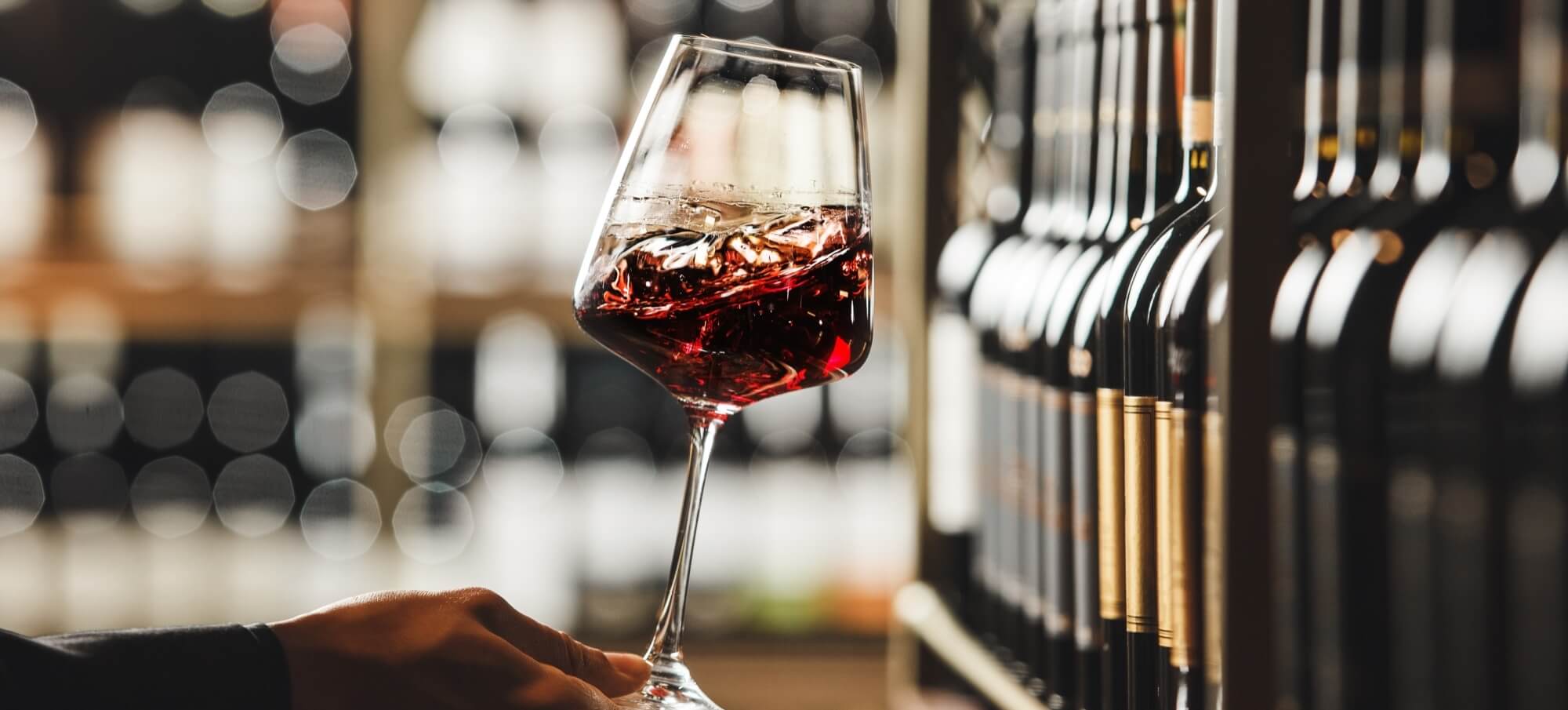
Sometimes referred to as Chiantishire, the impossibly beautiful area north of Siena is adorned with pastel-coloured stone houses, dense forests and historic olive groves that host picturesque vineyards. Here you’ll find two of Italy’s most famous red wines: Chianti and Brunello di Montalcino. The area needs thorough, joyful exploration – and tasting of course. Enjoy learning from those who have been in the trade for many generations, carefully nurturing the land that blessed them with such delightful products; learn the secrets of wine growing, how to pair wine with food, how wine is best stored and see how the architecture blends harmoniously into the landscape. The choice seems endless, but we have selected a few exciting ones: Ripi and its visionary approach brings new identity to Montalcino wines, experimenting with biodynamic labels, Capannelle lies in the realm of Chianti Classico and is a triumph of precision and discipline, while refined, elegant Fonterutoli has been run by the Mazzei family since 1435, providing immense knowledge of the land and the terroir.  Visit one – of all of them – and enjoy their delicious wines.

6. Perfection on a plate: Sienese cuisine

Italian food is a way of life, a doctrine that directs daily life and is deeply rooted into the local heritage. Tuscany is no exception and Siena has produced its own traditional, delicious dishes for centuries. Sourcing on local breed, bright pink or red PDO cinta senese is a hardy breed of pig that was already known in Roman times. Particularly tasty and tender, it is found in sauces and roasts, but can also be tasted on its own or with crostini as a tempting appetizer. The typical Ribollita stew is popular across Tuscany, but it actually originated in Siena: made with fresh vegetables and bread, it is the ideal winter dish, but is also enjoyed at room temperature in the summer. Sweets are, however, what Siena is perhaps most famous for, marzipan-based Ricciarelli and medieval Panforte being renowned goodies. Made with dried fruits, honey, candied fruits and spices, the earliest record of Panforte dates back to 1205 and you could see how it’s all made by visiting a fabbrica di panforte.

Learn from the master and then take a sample home with you: this will be a moment you’ll treasure at length.

7. Postcards from a dream: towns and villages in the Sienese countryside

Far richer and more surprising in real life, the landscape around Siena is everyone’s dream. Cypresses, olive groves and poetic vineyards are laid out in a harmonious balance that feeds the soul and hosts exquisite hilltop towns.  Be amazed by the superb harmony of Pienza, the ideal Renaissance town, with its lovely combination of church, papal palace and town hall, admire the unique medieval skyline of San Gimignano, the city that once hosted 72 towers – now only 14 remain – with an abundance of fine artworks and extraordinary frescoes in the collegiate church, Palazzo Pubblico and Pinacoteca. Perched on a hill, proud Volterra is another medieval surprise: famous for alabaster carving, its art gallery hosts works by Rosso Fiorentino, Luca Signorelli and Ghirlandaio.

What about the gentle, sloping hills of the Crete Senesi? It would appear that a magic painter laid out his canvas in front of you, each season capturing diverse hues and reflections of unique places like the convent of Monte Oliveto Maggiore, medieval Asciano or the Abbey of Sant’Antimo. This is sheer magnificence.

WHERE TO STAY

La Certosa di Maggiano in Siena

Accessibility
close
Accessibility Information

Together with our selected providers, we are committed to ensuring that our services are accessible to people with disabilities. We devote significant resources to ensure that our website and room booking pages are easier to use and more accessible for individuals with disabilities, based on the strong belief that everyone has the right to live with dignity, equality, comfort, and independence.

Along with our partners, we continuously strive to improve the accessibility of our website and the pages for booking rooms and/or purchasing additional products and services related to the stay. We firmly believe it is our collective moral obligation to allow seamless, accessible, and unhindered use, even for those of us with disabilities.

In our ongoing efforts to improve and consistently address accessibility issues, we regularly scan all web pages using accessibility scanners provided by third-party commercial partners to identify and fix any potential accessibility barriers on our site. Despite our efforts to make all our web pages and content fully accessible, some content may not yet have been fully adapted to the strictest accessibility standards. This may be due to not having yet found or implemented the most appropriate technological solution.

Compliance Status

This website and the room booking pages are partially compliant with the technical standard for websites and mobile applications UNI CEI EN 301549, and with the “AA” accessibility level required by the Web Content Accessibility Guidelines (WCAG) 2.1.
In particular, the compliance level of this website is constantly monitored through the tools provided by:
https://mauve.isti.cnr.it/
https://pagespeed.web.dev/

Non-accessible Content

Despite our efforts to ensure the accessibility of the website and booking pages, we are aware of some limitations we are working to resolve. Below is a description of the known limitations. Please contact us if you encounter an issue not listed below.

  • Image text alternatives: Some images do not have meaningful text alternatives for users.
  • Reading order: Due to the modular structure of some pages, the reading order of elements may not match their visual order.
  • Focus contrast: In some cases, when elements receive focus, there may be insufficient contrast between text color and background.
  • Keyboard operability: Some components cannot be operated using only a keyboard.
  • Animated content: Some pages contain animated content that cannot be paused or hidden.
  • Focus visibility: In some pages, the element with active focus is not visually identifiable.
  • Language accessibility: Some elements display text or accessible names only in certain languages.
  • Assistive technology: Assistive technologies may not always correctly announce messages.

Last Updated

This page on accessibility was last updated on June 25, 2025.