
Claudia Da Rin

Enchanted silence of Pantelleria

Enchanted silence – the wines of Pantelleria

There is a place where vines are shaped by the wind that constantly batters the land, their sweet and pungent taste a delight for the palate. There is a place where traditions are held in high esteem and carry on centuries-old practices.

There is a place where wine growing is so precious that it was inscribed in the UNESCO World Heritage List as Intangible Cultural Heritage of Humanity, This is Pantelleria, the daughter of the wind, where spectacular sunsets leave you speechless, the sea shapes each and every form, and natural wonders abound and astound

Heroic viticulture 

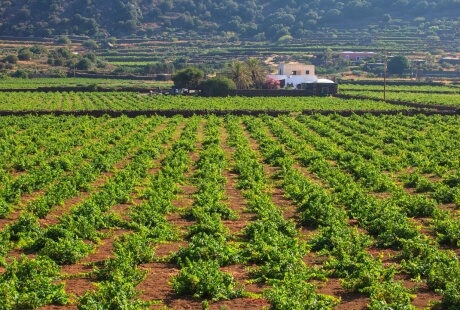
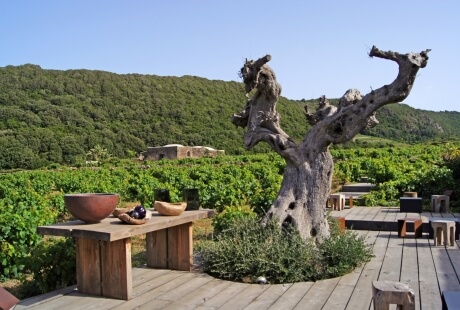
Pantelleria casts a spell because of its mesmerising landscapes and unique atmosphere, and yet most visitors are struck by its viticulture. To call it “heroic” is an understatement: the vines are shaped by the persistent wind and reflect how growers managed to adapt to it. Vines are planted in shallow, bowl-shaped depressions called conche, thus low to the ground, that also collect precious moisture.  

Any picking is done by hand and requires bending to your knees or waist on treacherous slopes: this Vite ad alberello – (head trained bush wine) is part of the Intangible Cultural Heritage of Humanity since 2014 and, in itself, would be enough to put Pantelleria wines in a league of their own. But then, of course, there is THAT taste of Zibibbo and Passito.

Zibibbo and Passito

The prized Zibibbo grape is inscribed in the UNESCO World Heritage List.

Zibibbo, meaning “grape” in Arabic, is also known as Muscat of Alexandria, as is thought to have originated close to the Egyptian city. This grape is used to make the dessert wine Zibibbo, Moscato di Pantelleria and its dried-grape form, Moscato Passito di Pantelleria.

Passito is obtained with an original and somewhat laborious tradition: the grapes are laid to dry under the sun on straw mats, so as to concentrate their sugars. They are then laid on an aromatic herb called “Disa”, until the sun transforms them into raisins, and then they are processed to obtains Passito DOC. The outcome is a rich, indulgent dessert wine that combines aromas of honey with the intensely rich flavour of marmalade and toffee.

Moscato and Passito di Pantelleria were awarded a DOC title in 1971. They count as the third Sicilian wines to be granted such a status, after Etna (1968) and Marsala (1969).

 A land of traditions

One may say that wine growing in Pantelleria goes back several millennia. Legend has it, in fact, that the goddess Tanit, from ancient mythology, allegedly seduced Apollo by serving him Muscat wine. Be as it may, this land enchants as you approach it, the wine surely playing a part.  Several famous people fell for its charm, most notably Giorgio Armani, but also Carole Bouquet and Gerard Depardieu, who bought their own vineyards in the 1990s in the Monastero valley.

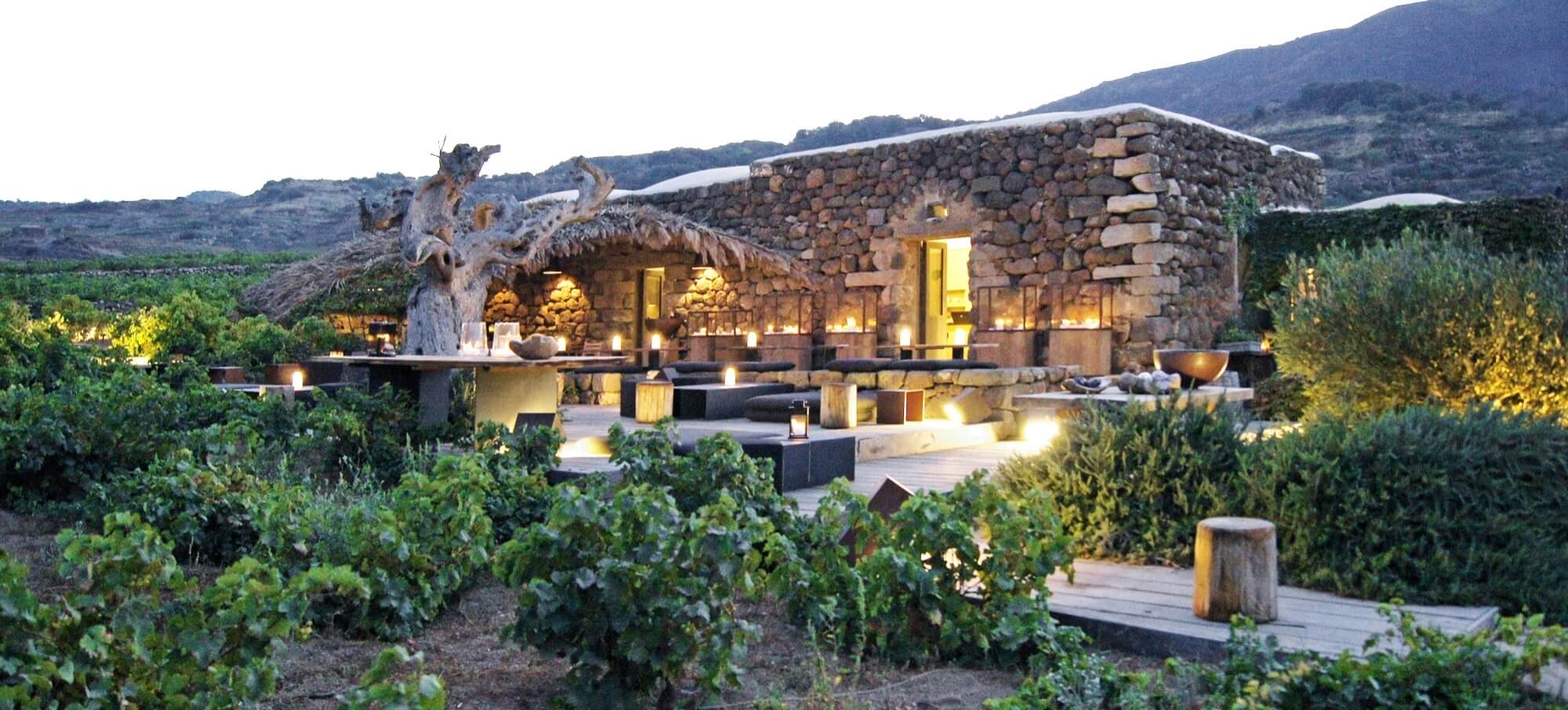
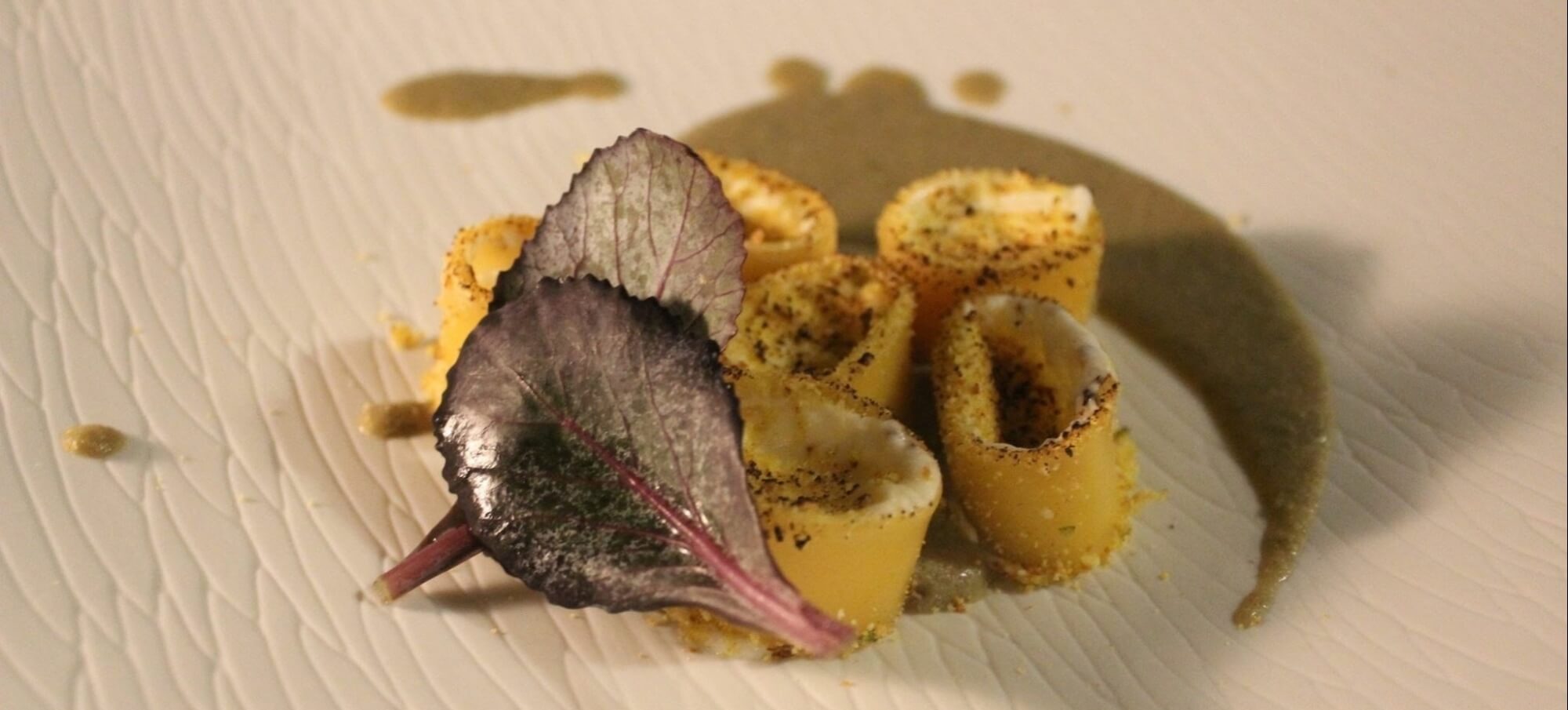
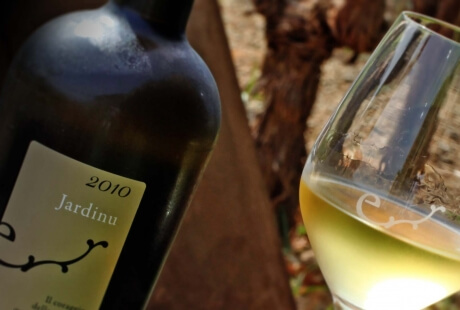
Former professional basketball player Giulia Pazienza Gelmetti also concocted what is considered one of the island’s best-kept secrets, the Coste Ghirlanda Winery. Here you can learn about locally grown wines in the Wine Laboratory: you will enjoy candlelit dinners while pairing gourmet food with excellent wines that display evocative names such as Silenzio, La nostra prima volta or Jardinu.

The ancient wine growing tradition, unique to Pantelleria, is passed down from one generation to the next in a spoken dialectal form. Work begins at the end of July and carries on until September, when celebrations bring the local communities together, reinforcing their roles as wine-makers. Wines were enjoyed only on the island until the 1880s, then they were exported to Italy and are now among Italy’s best kept precious secret.

Next time you savour some precious Pantelleria wine, think about the effort, dedication and pride that go into each and every bottle, as if a genie was coming out of it to fulfil your wishes

Travel Tips

Where to stay: Discover Sikelia Luxury Retreat

Where to eat and wine tasting: Coste Ghirlanda 

Ask for more info about the best accomodation and top Experiences

marketing@claudiadarin.it

Accessibility
close
Accessibility Information

Together with our selected providers, we are committed to ensuring that our services are accessible to people with disabilities. We devote significant resources to ensure that our website and room booking pages are easier to use and more accessible for individuals with disabilities, based on the strong belief that everyone has the right to live with dignity, equality, comfort, and independence.

Along with our partners, we continuously strive to improve the accessibility of our website and the pages for booking rooms and/or purchasing additional products and services related to the stay. We firmly believe it is our collective moral obligation to allow seamless, accessible, and unhindered use, even for those of us with disabilities.

In our ongoing efforts to improve and consistently address accessibility issues, we regularly scan all web pages using accessibility scanners provided by third-party commercial partners to identify and fix any potential accessibility barriers on our site. Despite our efforts to make all our web pages and content fully accessible, some content may not yet have been fully adapted to the strictest accessibility standards. This may be due to not having yet found or implemented the most appropriate technological solution.

Compliance Status

This website and the room booking pages are partially compliant with the technical standard for websites and mobile applications UNI CEI EN 301549, and with the “AA” accessibility level required by the Web Content Accessibility Guidelines (WCAG) 2.1.
In particular, the compliance level of this website is constantly monitored through the tools provided by:
https://mauve.isti.cnr.it/
https://pagespeed.web.dev/

Non-accessible Content

Despite our efforts to ensure the accessibility of the website and booking pages, we are aware of some limitations we are working to resolve. Below is a description of the known limitations. Please contact us if you encounter an issue not listed below.

  • Image text alternatives: Some images do not have meaningful text alternatives for users.
  • Reading order: Due to the modular structure of some pages, the reading order of elements may not match their visual order.
  • Focus contrast: In some cases, when elements receive focus, there may be insufficient contrast between text color and background.
  • Keyboard operability: Some components cannot be operated using only a keyboard.
  • Animated content: Some pages contain animated content that cannot be paused or hidden.
  • Focus visibility: In some pages, the element with active focus is not visually identifiable.
  • Language accessibility: Some elements display text or accessible names only in certain languages.
  • Assistive technology: Assistive technologies may not always correctly announce messages.

Last Updated

This page on accessibility was last updated on June 25, 2025.